
This year is the 6th anniversary of the founding of the Fenzi TEAM titles program — and we take a look at how it's grown and reveal a new, up-and-coming addition!
4184 Hits
4184 Hits
This year is the 6th anniversary of the founding of the Fenzi TEAM titles program — and we take a look at how it's grown and reveal a new, up-and-coming addition!
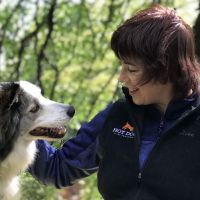
Do you have a new dog or puppy? Are you struggling to find opportunities to train with them because your older dog kicks up stink? When a second dog is added to a household, things can change in unexpected ways. One of those is that training stops.
Why is that?
Usually it is because the first dog objects strongly to being 'left out' while the new addition receives attention and play/food.
This is both difficult to deal with and causes us to feel guilty. Training is no longer fun and rewarding for us so we stop doing it. Rest assured, the guilt thing is totally normal. If you've not had two dogs before it can be a bit of a shock and the dynamics certainly get turned upside down.
Often referred to as dogs that "chase," predation in dogs can be frustrating — Simone and I talk about what's really going on and what you can do about it.
Clear communication and clarity are really important in dog training. The more clear we can be with our dogs, the faster they can learn what we want. One area that can sometimes get a little messy is marking behaviors. Most trainers understand that the correct behavior should get some kind of marker, like a click or a verbal marker such as "yes". But often, novice (and sometimes advanced, too!) trainers will mark and move all at the same time. However, it's very important that we isolate that marker cue!
While doing a chicken camp with Terry Ryan, she would always say "click THEN treat." What trainers often are told is "click and treat" or "mark and treat", but if you specify "mark THEN treat", it makes sense to put a pause in there.
So why is this important? Does it really matter?
Well, yes, it does.
Julie Symons joins me to talk about nosework, obedience, and the pros and cons of training for multiple sports!
Host Melissa Breau with panelists Jessica Hekman, PhD, DVM; Kim Brophey; and Sharon Carroll to talked about "It's All In How They're Raised (Or Is It?)" during our lunch break for the Lemonade Conference on February 12th, 2022 — and we've shared it here for those who missed it live!
There are a ton of different methods out there for working with reactive dogs — how do you decide what to use when and with which dog? Karen and I talk about in this week's podcast.
Host Melissa Breau with panelists Denise Fenzi; Kamal Fernandez; and Dante Camacho talked about The Future of R+ Training during our lunch break for the Lemonade Conference on February 13th, 2022 — and we've shared it here for those who missed it live!
Jake Schneider joins me to talk — we discuss how to stop your dog from biting your hand instead of the toy and add value to yourself even when there's something else valuable in the environment (like a decoy!).
Clarity is critical for any learner. Whether we use an errorless learning approach, or we use a method of training that incorporates highlighting errors to our dog, it is still essential that we maximize the likelihood of success through careful set ups. It is also necessary to always be prepared to rapidly change strategies, as soon as we notice our dog is not becoming more confident, and more successful, throughout our training sessions.
Before we dive into the specific issues that can occur in our attempts to create successful and confident complex behavior chains, let's look at the broader area of managing errors.
Sara Brueske joins me to tell me why she teaches toy play with food — and all the benefits that come with it.
On Feb. 11th, 2022, the first day of The Lemonade Conference, our free lunch panel was on Mental Health for the Reactive Dog. Melissa Breau was joined by Amy Cook, PhD; Sarah Stremming; and Sophie Liu, DVM. The recording from the live stream is available below.
Shade comes on the podcast to talk about training toy behavior to create cooperative play, and the process of shaping heelwork.
Today Marjie and Denise join me to talk about what's new at this year's Lemonade Conference and why it'll be the last annual online conference.
Many dogs find teeter and weaves are some of the harder agility obstacles to learn — join me, Megan, and Barbara for a conversion on how they approach training them!
PAALS founder Jennifer Rogers joined me to talk about how she got involved in assistance dog training and what PAALS seeks to do today.
You may have heard of Look At That (LAT) but have you heard of LATTE? Leslie joins me to talk about her latest game for working with dogs who need a little extra structure to be successful.
How do you set goals for your training? Ever wondered how leading sports competitors do it? Megan Foster, Petra Ford, and Sharon Carroll recently offered a free webinar on the subject, just in time for the new year — and we've shared it here for those who missed it live!
Erin and I chat about what it takes to keep our aging dogs living their best lives — and how even small adjustments can make a big difference in their lives.
In this episode I catch up with FDSA founder Denise Fenzi and share a bit about what's happening behind the scenes at the school and what folks should keep an eye out for next year.
By accepting you will be accessing a service provided by a third-party external to https://www.fenzidogsportsacademy.com/
Copyright © Fenzi Dog Sports Academy and individual instructors.
Connect with us! 

